
FREE BUSINESS ENGLISH LESSON
Communicate more confidently in American workplaces
Practice clear requests, useful questions, constructive feedback, and respectful disagreement.
Communication styles vary by organization, team, and relationship. These examples give you a starting point. Notice how your colleagues communicate, then adapt your wording to the situation.
Four useful workplace communication habits
Make your message clear
State what you need and why. Clear wording can still be friendly and polite.
- “Could you send the report by Friday? That will give us time to review it before the meeting.”
- “My concern is the timeline. Could we discuss another approach?”
- “Let’s confirm the deadline so everyone knows what to expect.”
Ask questions when you need clarification
A specific question helps you understand expectations and avoid unnecessary rework. Choose a suitable moment or channel to ask.
- “Could you clarify what success looks like for this project?”
- “Would you like a draft first or the final version?”
- “Is there any flexibility with this deadline?”
Give and receive feedback constructively
Focus on the work, explain your suggestion, and give the other person room to respond. For sensitive feedback, a private conversation may be more appropriate.
- “This is a solid start. I suggest shortening the introduction so the main point is easier to find.”
- “The examples make your recommendation much clearer.”
- “Thanks for the feedback. Could you show me which section needs more detail?”
Summarize decisions and next steps
A brief summary helps colleagues check their understanding and see what happens next.
- “Here are the three key points from today’s meeting.”
- “To summarize, we’ve agreed to move forward with option B.”
- “I’ll send the action items by 4 p.m. Eastern Time today.”
Common communication difficulties
When workplace habits are unfamiliar, it can be hard to judge when to speak or how direct to be. Watch for these situations:
- Unclear instructions: Ask a focused question instead of guessing.
- A request without a deadline: State when the work is needed, or ask about timing.
- A concern left unspoken: Choose a suitable moment to explain the issue and suggest a next step.
- Too much introductory wording: Make sure the main point is easy to find.
- Repeated apologies for routine requests: A polite request and a thank-you may be enough.
Helpful alternatives to try
When an instruction is unclear
Try: “Just to confirm, would you like the full report or a one-page summary?”
When you disagree
Try: “I see the benefit of that approach. My concern is the cost. Could we compare it with another option?”
When a problem may affect the deadline
Try: “The supplier’s delay could affect Friday’s delivery. I’m checking an alternative and will update you this afternoon.”
Quick quiz: Practice workplace communication
Choose the best answer for each situation, then open the explanation.
1. You need a file by 3 p.m. Which request makes that clear and stays polite?
- “Could you please send the file by 3 p.m.?”
- “I’m wondering if it might be possible for you to send the file.”
- “Send file.”
Show answer
A. It states the action and deadline politely. B could work in some situations, but it leaves out the deadline. C is abrupt.
2. Which response offers a constructive alternative?
- “I don’t think that will work.”
- “I see your point. Another option we could consider is…”
- “Whatever you want is fine.”
Show answer
B. It acknowledges the other person’s idea and introduces another option. A would be more useful with a reason or suggestion.
3. You are unsure which version your manager needs. What is the most useful next step?
- Ask which version is needed.
- Choose a version without checking.
- Wait until the deadline to mention the uncertainty.
Show answer
A. A specific clarification helps you deliver the right work and can prevent rework.
4. Which follow-up is brief, friendly, and names the topic?
- “I would be grateful if you could kindly advise at your earliest convenience.”
- “Hi Sam, just checking in. Any update on the proposal?”
- “Hello.”
Show answer
B. It identifies the topic and asks a clear question. A is more formal and does not name the topic; C does not explain what you need.
5. Which opening gives readers the clearest structure?
- “Here are the three key points from today’s meeting.”
- “We should all be aware of several things moving forward.”
- “If it’s okay with everyone, I’d like to possibly mention some points that maybe could be helpful.”
Show answer
A. It tells readers what follows and how many points to expect. B is vague, and C uses several words before reaching the purpose.
6. Which response acknowledges a colleague’s perspective and invites another option?
- “That won’t work.”
- “I’m not sure about that idea.”
- “I see where you’re coming from. Could we explore another option?”
Show answer
C. It recognizes the other person’s perspective and opens a discussion. A and B can express concern, but neither offers a next step.
BUSINESS ENGLISH WITH AMY GILLETT
Keep improving your Business English
What does your American colleague really mean? Which expressions will help you sound more natural at work? Explore practical lessons from Amy Gillett, author of Speak Business English Like an American.
Learn workplace expressions, understand American communication habits, and test your knowledge with quizzes and explanations.
Free and paid subscriptions available.
Build your workplace vocabulary
Explore books with dialogues, explanations, exercises, and audio practice. Select a cover or title to learn more.

Speak Business English Like an American
Practice American business idioms through workplace dialogues and audio.

Speak Better Business English and Make More Money
Expand your vocabulary with additional business expressions and dialogues.
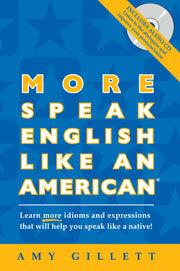
More Speak English Like an American
Learn everyday expressions for conversations with colleagues and friends.
Try one small change this week
Choose one phrase from this lesson and use it in a suitable workplace conversation. Notice how the other person responds. Adjusting one request, question, or update is a practical way to build confidence.
Continue learning: Email & Messaging Etiquette · American Meeting Culture · American Business Culture · English Learning Hub